You Don't Have a Skill. You Have a Novice.
Vinay Patankar · 08 Apr, 2026 · Technology
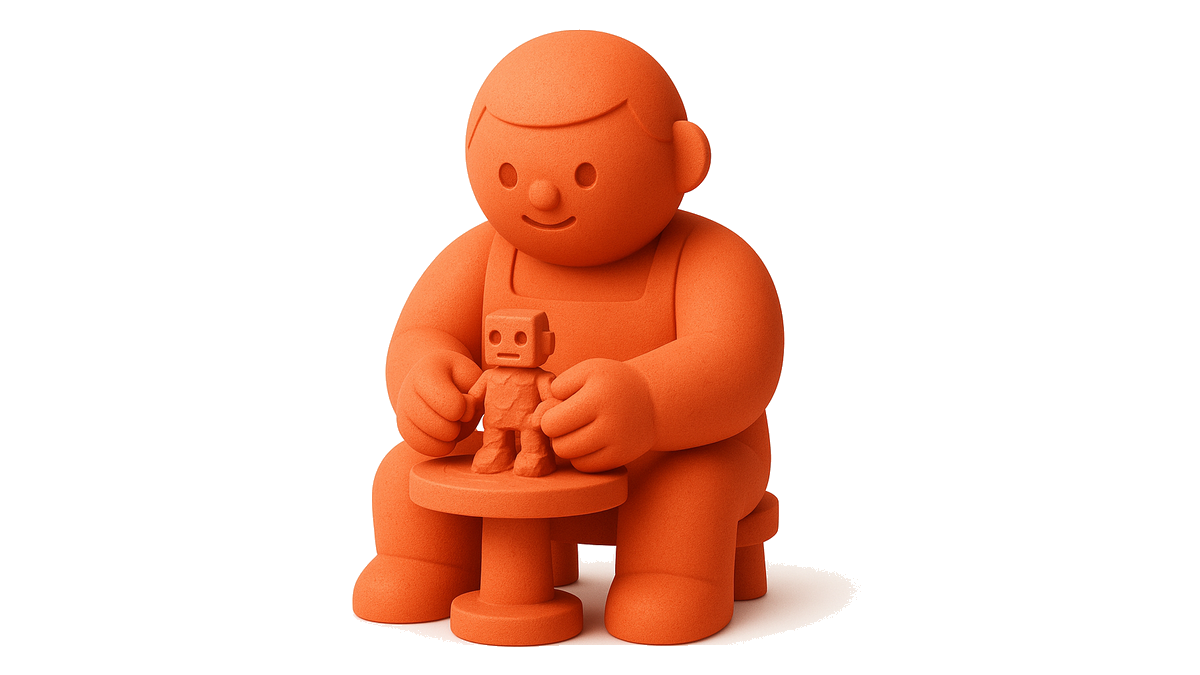
You don’t have a skill. You have a novice.
My team keeps telling me they’ve “built a skill.” One person gave Claude a short prompt and hit create. Another found something on a marketplace and installed it. Both walked away thinking the job was done.
It wasn’t. They didn’t build anything. They downloaded a stranger and handed it the keys. And the stranger is kind of an idiot.
People treat AI skills the way we used to treat WordPress plugins. Install it, expect it to work. That mental model made sense for traditional software. Teams tested thousands of edge cases before shipping.
AI skills don’t work like that. A freshly created skill is untrained. It’s never encountered your business context, your edge cases, your definition of “good.”
I learned this the hard way while building one skill through about 100 test runs: AI isn’t magic when the system has to compound.
The split most people miss
There are two types of AI skills, and the difference matters more than most people realize.
Generic skills work out of the box. “Run an SEO audit.” “Summarize this article.” “Generate a compliance checklist.” The skill doesn’t need to know you or your business to do an adequate job.
Context-dependent skills are completely different. “Write a post in my voice.” “Prepare my weekly board report.” “Draft a customer email that sounds like me.” These need your tone, your audience, your standards. A fresh skill reads like AI wrote it. Because AI did, without hundreds of corrections.
Karpathy coined “vibe coding” in 2025. A year later he walked it back. The vibes weren’t enough. Production requires structure.
The same applies to skills. The creation is the vibe. The training is the structure.
What training actually looks like
The gap between a novice skill and a hardened skill is the gap between a new hire on day one and that same person after a year of direct feedback.
The skill has to learn what “too formal” means for your brand. What “too long” means for your audience. Which edge cases to handle and which to flag. What your definition of done actually looks like.
This takes hundreds of feedback loops. Not dozens. Hundreds.
I’ve watched skills go from producing generic, forgettable output to nailing the exact tone, format, and edge-case handling we need. The difference between iteration 10 and iteration 200 is night and day. Most people give up at iteration 3 and conclude that “AI skills don’t work.”
Why this matters now
The AI skills ecosystem is exploding. Marketplaces, skill libraries, prompt templates, agent frameworks. The barrier to creating a skill has dropped to near zero. You can have a working skill in under a minute.
But “working” and “production-ready” are separated by a canyon. The competitive advantage in 2026 comes from infrastructure, not intelligence. The infrastructure is the training loop. The intelligence is what comes out after hundreds of cycles.
Teams that understand this will build skills that compound. Teams that don’t will keep installing novices and wondering why AI feels underwhelming.
A skill you haven’t trained is not a skill. It’s a first draft.